Dragon, phoenix, turtle: 4 things to check before you get a Chinese tattoo
A character tattoo is permanent; a bad one is permanently embarrassing. Four checks that take twenty minutes and save you from the tattoo-fail gallery.
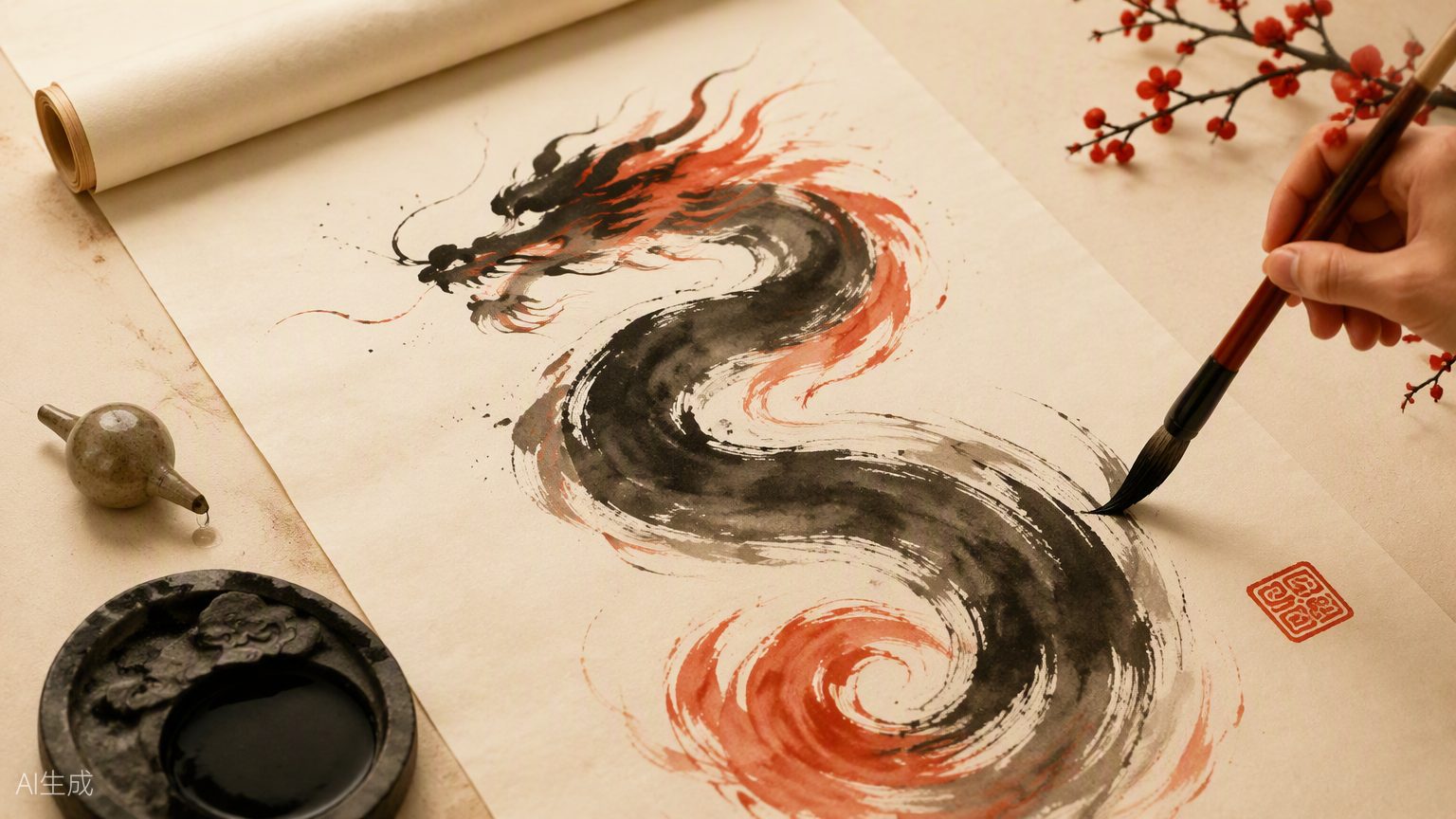
Chinese character tattoos fail in four predictable ways. The character is upside down. It means something different from what the tattoo artist’s flash sheet claimed. It is a perfectly real character that no Chinese person would ever ink on themselves. Or — the quietest failure — it is written in a font that looks like a passport stamp.
All four are avoidable in about twenty minutes. Here is the checklist.
Check 1: Look the character up in a real source, not the flash sheet
The sheet on the tattoo parlour wall has been photocopied since 1997 and was wrong at birth. Before anything else, find the character in an actual dictionary and read what it actually means — every character page on this site gives you the meaning, the stroke count, and the story behind the shape.
A few that are usually safe, because they mean what people think they mean:
- 龙 lóng — dragon. In Chinese tradition the dragon is power, luck, and imperial authority — nothing like the fire-breathing villain of European folklore. You are not tattooing a monster.
- 福 fú — blessing/good fortune. The character on the red diamond pasted on doors at New Year. About as warm a meaning as the script offers.
- 爱 ài — love. Real, common, and means exactly what you hope.
- 喜 xǐ — joy. Double it (囍) and you have the wedding symbol.
Check 2: Ask a native reader — about connotation, not just meaning
Dictionaries give denotation. Tattoos live and die on connotation. Some characters are dictionary-correct and socially bizarre: beautiful words that happen to be old-fashioned, clinical, or associated with a brand, a slogan, or a primary-school slogan poster. A native speaker will catch this in half a second, and it is the single highest-value step on this list.
Also ask about the single-character problem: some concepts are naturally two-character words in modern Chinese, and wearing one half of the word reads like tattooing “happi” and stopping.
Check 3: Get the strokes right — all of them, in the right places
Characters are not vibes; a stroke in the wrong place is a different character or a non-character. 爱 has 13 strokes and every one is load-bearing. Before you commit, watch the character being written stroke by stroke (every character page here has the animation) and make sure your artist is working from a large, correct rendering — not a thumbnail of a thumbnail.
While you are at it, decide on the script: 龙 is simplified, 龍 is traditional. Both are correct; they are different traditions with different visual weights, and “whichever the stencil had” is not a reason.
Check 4: Choose calligraphy, not a system font
The default for bad tattoos is whatever bold sans-serif the design software opened with — the visual equivalent of getting an English tattoo in Arial Bold. Chinese has a 2,000-year calligraphy tradition with recognisable styles: the disciplined regular script (楷书), the running script (行书) that flows like handwriting, the ancient seal script (篆书) that looks carved. The sheets on this site are set in a kai-style face if you want a reference for what disciplined, human regular script looks like.
A good artist can work from calligraphy. If yours insists on the font menu, that is information too.
The twenty minutes, budgeted
Five minutes to look the character up and read its story. Ten to find a native reader (a friend, a language exchange, the comments of any Chinese-learning community). Five to watch the stroke order and pick a calligraphy style. The tattoo lasts somewhat longer.
The characters from this article
Print all 4 →Keep reading