Why 家 has a pig under a roof — 5 characters that tell you how ancient China actually lived
A pig under a roof means home. A woman under a roof means peace. Five everyday characters that are really tiny documentaries about how people lived, worked and hoped three thousand years ago.
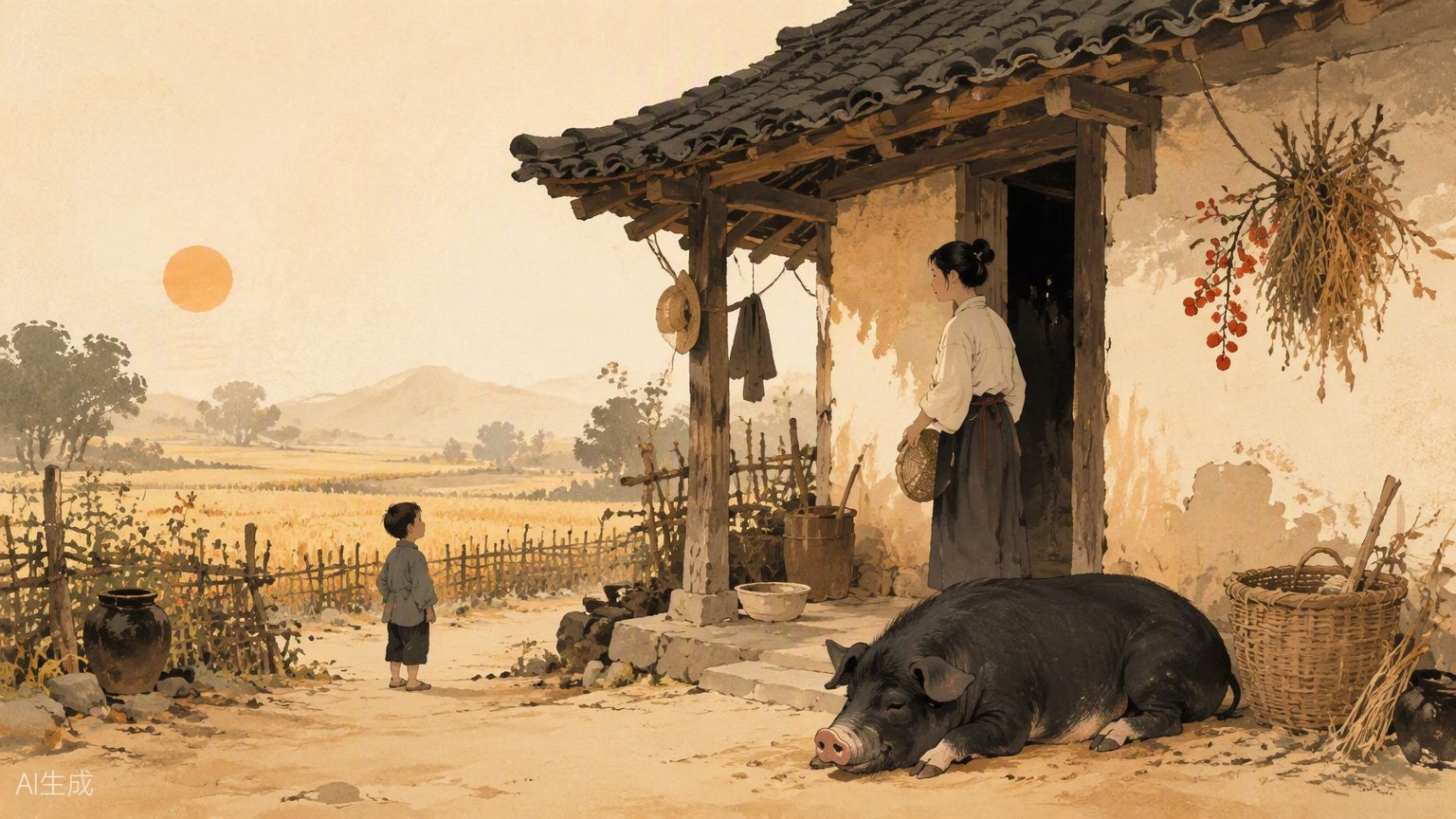
Some characters are drawings of things. The five below are something better: drawings of a life. Read them the right way and they tell you what mattered to the people who first wrote them down — what counted as wealth, as safety, as a good day.
One honest note before the stories: characters this old come with scholarly debate attached. These are the mainstream accounts — the ones you will find in standard references — and where a reading is more “good way to remember it” than “proven history”, we say so.
家 jiā — home: a roof over a pig
宀 is a roof. 豕 is a pig. In early China, a pig under your roof meant livestock, food through the winter, a settled life — that was home. Not a house (the building is just the roof in the picture), but the household: the place where your wealth lived and your family ate.
Next time you write 家, you are drawing a farmyard.
安 ān — peace: a woman under a roof
The same roof, 宀, over 女, a woman. The traditional reading: a woman safely under a roof is calm, peace, settled. Three thousand years later the character still carries that picture of shelter — 安全 is “safety”, 安心 is a heart at rest.
好 hǎo — good: a woman and a child
女, woman, next to 子, child. A mother with her child — that was the picture of “good”. It is the first word of Mandarin most people ever learn (你好), and almost nobody tells them they are saying hello with a family portrait.
男 nán — man: strength in the field
田 is a field — you can still see the paddies divided into squares. 力 is a plough, or a muscled arm; either way, strength. The character for “man” is a job description from an agrarian world: the one who puts strength into the field.
Whether that division of labour still holds is a question for society. The character just records that it once did.
休 xiū — to rest: a person leaning on a tree
人, a person, beside 木, a tree. A worker leaning against a tree at noon — resting. Of all the little documentaries in the script, this might be the most modern: three millennia later, shade plus a pause is still the universal symbol for “break time”.
The pattern underneath
Notice what these five have in common: none of them is abstract. “Home”, “peace”, “good”, “man”, “rest” are big ideas, and the script builds every one of them out of concrete stuff — roofs, pigs, fields, trees, mothers. That is the trick that makes characters learnable: the abstract is always assembled from the physical, and the physical is drawable.
Each character above has its own page with the full story, stroke order, and a printable practice sheet.
The characters from this article
Print all 5 →Keep reading