The 12 radicals that unlock 500 characters — and the order to learn them in
A radical is a meaning tag hiding inside a character. Learn these twelve and you can make a real guess at hundreds of characters you have never seen before.
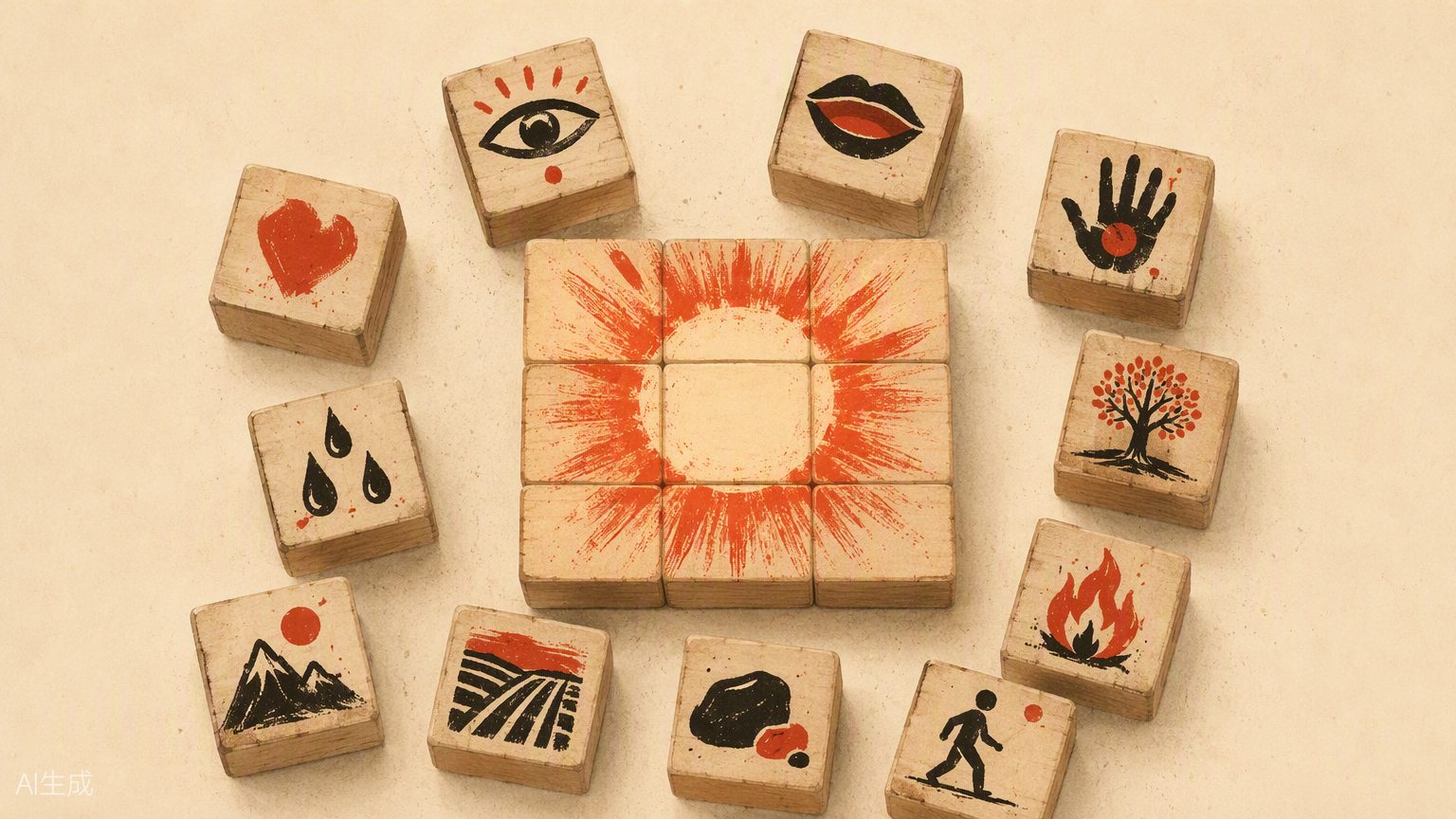
Here is the best-kept open secret of Chinese literacy: most characters are not one drawing, they are two — a sound part and a meaning part. The meaning part is called a radical, and it works like a tag. See 氵in a character you have never met? It is probably about water. See 心? Something to do with feelings or thought.
You will not guess the exact word. But “roughly what territory is this character in” is an enormous head start — it is the difference between 3,000 strangers and 3,000 people wearing name tags.
These twelve radicals cover the most ground for a beginner. The order below is deliberate: the ones that stay visually unchanged come first, the shape-shifters come last.
The ones that look like themselves
口 kǒu — mouth. Characters about mouths, sounds, and speech: 吃 eat, 叫 call, 问 ask. If there is a little square in a character, someone is probably talking, eating, or shouting.
目 mù — eye. 看 look, 眼 eye, 睡 sleep. The eye got tipped vertical over the centuries, but it is still an eye.
女 nǚ — woman. 好 good, 妈 mum, 她 she. Whole families of characters about people and relationships carry her.
山 shān — mountain. 峰 peak, 岛 island. Geology and geography live here.
田 tián — field. 男 man (strength in the field), 界 boundary. Farming organised early China, and the field radical organised the characters about it.
石 shí — stone. 破 break, 硬 hard. Minerals, tools, and anything with the heft of rock.
The ones that change shape
These are worth the extra effort, because they appear everywhere — but they compress when they move to the side of a character.
人 rén → 亻— person. On the left of a character, the walking person flattens into two strokes: 你 you, 他 he, 休 rest (a person 亻leaning on a tree 木). This is the single most common radical in the script.
手 shǒu → 扌— hand. 打 hit, 拿 take, 推 push. Nearly every verb you do with your hands wears this tag.
心 xīn → 忄— heart. 怕 fear, 快 happy-fast, 懂 understand. Emotions and thinking. (It also stays whole at the bottom: 想, 忘.)
水 shuǐ → 氵— water. 河 river, 海 sea, 洗 wash, 酒 wine. Three dots on the left and you are in wet territory.
火 huǒ → 火/灬 — fire. 烧 burn, 灯 lamp on the left; 煮 boil, 热 hot as four dots at the bottom — the four dots are flames licking the pot.
木 mù — tree/wood. 桌 table, 椅 chair, 桥 bridge. Everything once made of wood — which, for most of Chinese history, was nearly everything.
How to actually use this
Don’t study radicals from a table. The next time you meet a new character, ask one question: what is the tag? Then look the radical up and see if the meaning territory matches. 淋 has 氵— and yes, it means to drench. After a month of this habit you will be reading radicals reflexively, and new characters will start arriving pre-sorted.
Every radical above has its own page here with its story and a practice sheet — writing the radical ten times is the fastest way to start seeing it inside bigger characters.
The characters from this article
Print all 12 →Keep reading