5 character pairs every learner mixes up — and the one-line trick for each
人 and 入, 未 and 末, 刀 and 力: five pairs that look identical at speed, with a one-line trick for each so you never swap them again.
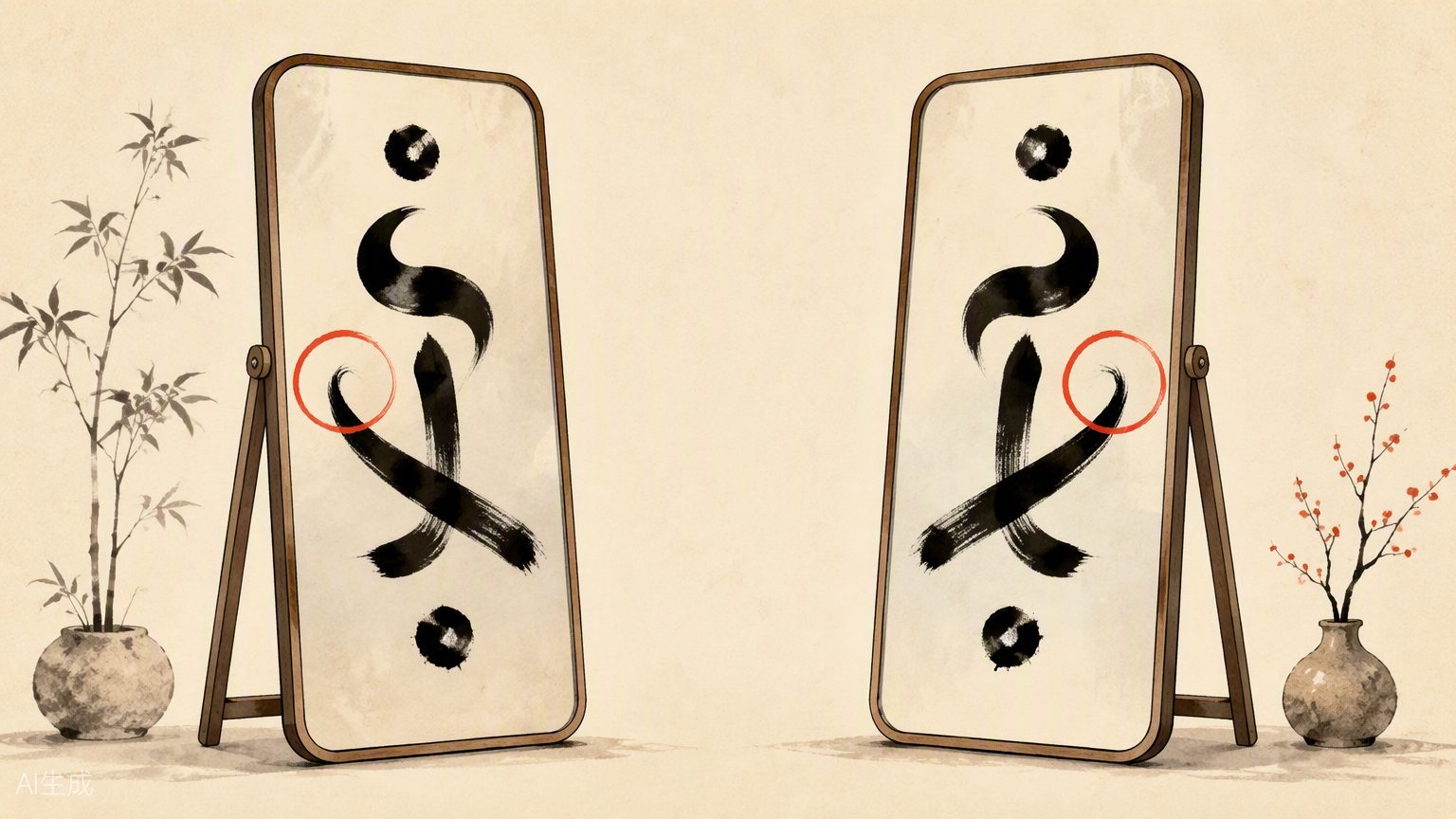
Every learner has a private list of characters they get wrong every single time. The pairs below are on almost everyone’s list — they differ by one stroke, one flick, or one proportion, and at reading speed they are identical. The fix is never “look more carefully”. The fix is a story that makes the difference do the remembering for you.
人 rén (person) vs 入 rù (to enter)
Two strokes leaning on each other, either way round. The trick: a person stands with their head to the left and feet planted; to enter you stoop through the door head-first, right side leading. If the right stroke is on top, someone is going in.
木 mù (tree) vs 本 běn (root; origin)
本 is just 木 with one extra line at the bottom — and that line is the whole point. The trick: the extra stroke marks the roots. 本 means root and origin (it is the 本 in 日本, “sun’s origin”, and in 本书, “this very book”). The tree you know; the line says look where it grows from.
日 rì (sun) vs 目 mù (eye)
Same box, different proportions: 日 is wider than it is tall, 目 is tall and narrow. The trick: the sun hangs wide in the sky; an eye (in the old drawing) is tilted upright. Wide = sun, tall = eye. Say it once and the proportions stop being arbitrary.
未 wèi (not yet) vs 末 mò (end; tip)
Both are 木 with an extra line on top — the only difference is which horizontal is longer. The trick: in 未 the top branch is still short — the tree has not yet finished growing. In 末 the top line stretches long — that is the tip, the very end of the branch. Short top, not yet; long top, the end.
刀 dāo (knife) vs 力 lì (strength)
One curved stroke, one hook — the knife’s blade sticks out to the left at the top, strength stays closed. The trick: a knife has an edge that sticks out; strength is a flexed arm, muscle tucked in. Edge out, blade; arm in, power.
The general lesson
Mix-ups persist when you study characters as whole shapes to be photographed. They dissolve when you study the difference as a story. Next time two characters keep swapping places in your memory, don’t drill them fifty times — find the one stroke that differs and give it a job. Then write both, once each, on a practice sheet, and let your hand learn what your eyes kept missing.
The characters from this article
Print all 10 →Keep reading